Research Thrusts
The NYUAD Wireless Center is structured around five tightly interconnected research thrusts that collectively aim to realize omni-band wireless connectivity across radio and optical domains. These thrusts span the full research and development continuum—from fundamental channel understanding to system design, analysis, optimization, and experimental validation.
RT1 Channel Modeling
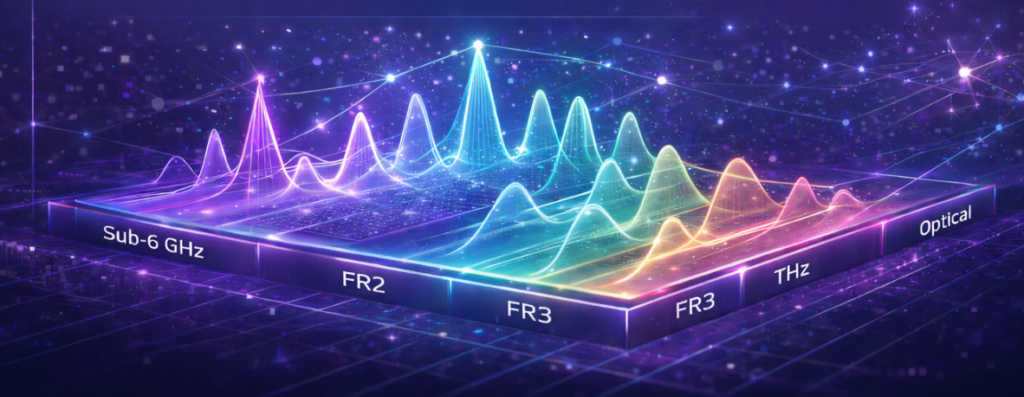
Wireless system design is fundamentally constrained by the characteristics of the propagation channel. While sub-6 GHz and mmWave channels are well understood, emerging 6G spectrum candidates introduce fundamentally new propagation phenomena that require rethinking traditional models. To address these challenges, this thrust focuses on:
- Development of accurate channel models for emerging spectrum including cmWave (FR3), THz, and optical bands
- Investigation of application-specific channel models tailored to new 6G use cases, particularly Integrated Sensing and Communications (ISAC)
By providing a fundamental understanding of propagation characteristics through empirical measurements and statistical modeling, RT1 establishes the basis for all subsequent system design and optimization.
RT2 Radio-Based Wireless Connectivity
This thrust addresses the physical layer design of next-generation wireless systems operating in cmWave and THz bands under practical hardware constraints. The research activities within this thrust include:
- Development of realistic signal and system models for THz transmission and reception under both electronic and photonic front-end architectures
- Waveform design and link adaptation tailored to the unique characteristics of THz channels and hardware impairments
- Development of scalable beamforming architectures for extreme massive MIMO systems across cmWave and THz bands, encompassing both far-field and near-field regimes
- Exploration of Reconfigurable Intelligent Surfaces (RIS) to enable programmable wireless environments, supporting coverage extension and enhanced link reliability
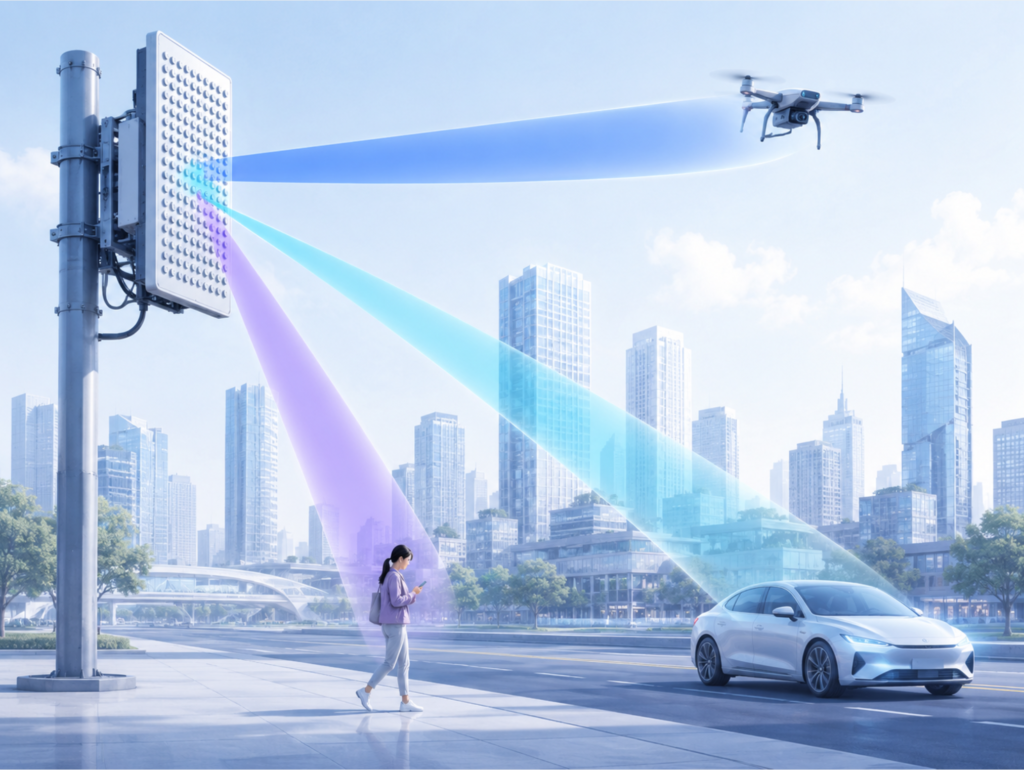
- Design of ISAC systems to enable the dual use of wireless transceivers for communication and sensing
By developing channel-aware and hardware-constrained physical layer designs, RT2 unlocks the full potential of cmWave and THz systems for next-generation wireless connectivity.
RT3 Light-Based Wireless Connectivity
This thrust goes beyond the traditional radio spectrum and leverages visible light (VL) and infrared (IR) bands to enable wireless connectivity with ultra-high data rates, enhanced security, and interference-free operation. Key research directions include:
- Development of visible light communication (VLC) systems for indoor and vehicular wireless access
- Design of free-space optical (FSO) communication systems for high-capacity terrestrial and airborne backhaul
- Investigation of coherent optical system design leveraging advanced DSP techniques
- Exploration of emerging concepts such as optical ISAC and optical RIS for mitigating optical channel impairments
By leveraging light-based communication technologies, RT3 extends wireless connectivity beyond the radio spectrum and develops complementary and, in some cases, transformative alternative to radio-based systems in future networks.

RT4 Omni-Band Wireless Connectivity
Building on advances in radio and optical domains, this thrust aims to enable seamless operation across multiple spectrum bands through adaptive and reconfigurable system design. The research activities within this thrust include:
- Design of cognitive wireless systems with intelligent spectrum selection and front-end/baseband adaptation
- Development of spectrum-aware resource allocation and scheduling strategies across heterogeneous bands
- Investigation of learning-driven algorithms for dynamic band selection, link configuration, and QoS-aware optimization
By enabling intelligent orchestration of the full electromagnetic spectrum, RT4 paves the way toward realizing the omni-band wireless concept and achieving seamless, efficient connectivity for next-generation networks.
RT5 Experimental Validation
To bridge the gap between theory and practice, this thrust focuses on the experimental validation of proposed models, algorithms, and system designs under realistic operating conditions. The main efforts concentrate on
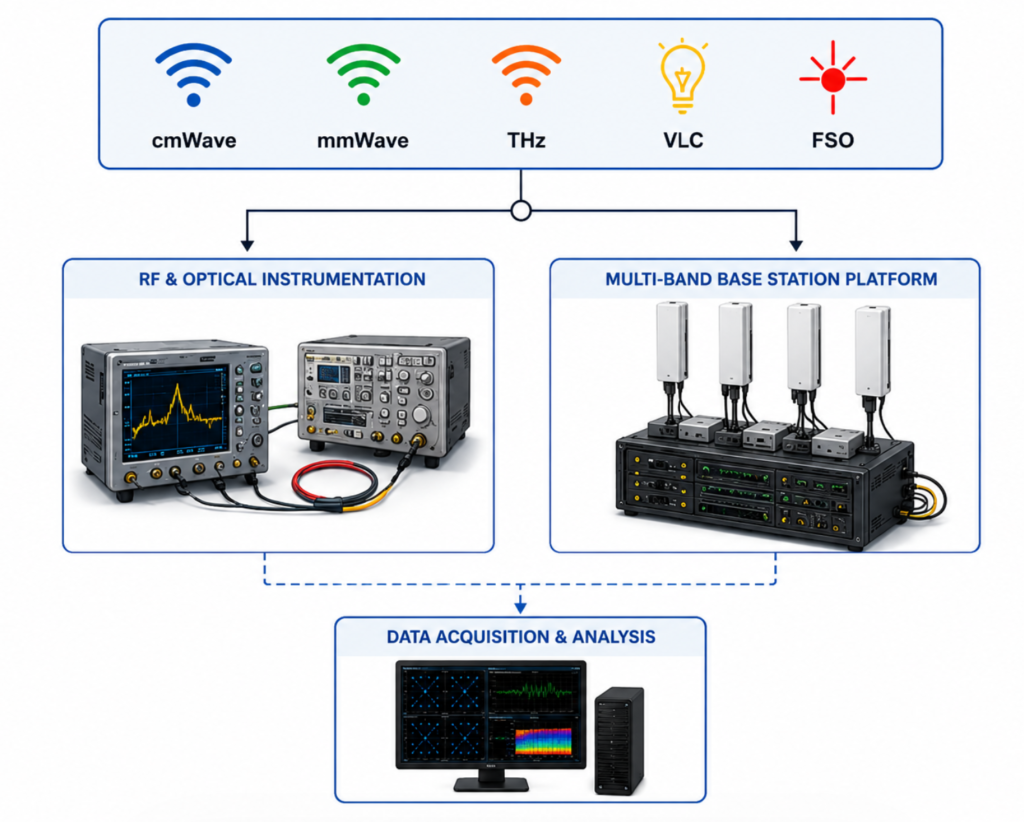
- Development of experimental testbeds across the full spectrum, including cmWave, mmWave, THz, VLC, and FSO systems
- Implementation and validation of advanced physical layer designs in real-world environments
- Experimental evaluation of ISAC systems to demonstrate joint communication–sensing performance and trade-offs
- Integration of multi-band platforms to demonstrate omni-band wireless connectivity
By enabling real-world validation and prototyping, RT5 ensures the practical feasibility of proposed technologies and accelerates their translation into next-generation wireless systems.